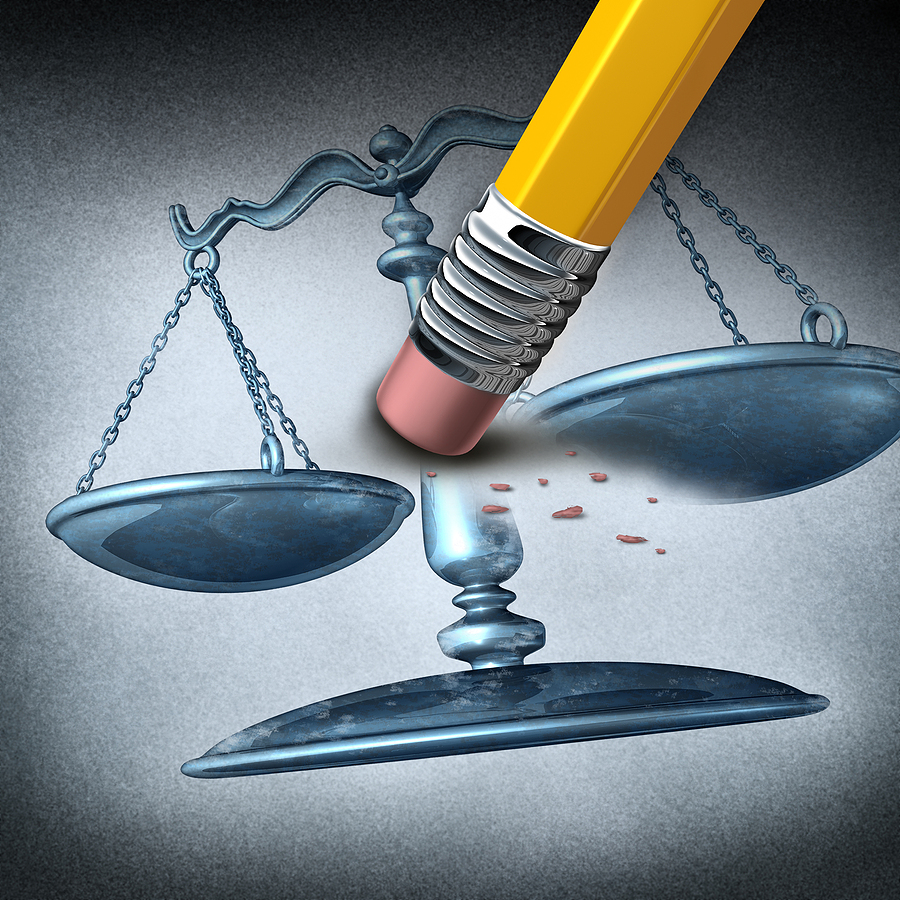
Andre "Eddie" Edgard - Prosecutor Misconduct
Andre, Edgard (Eddie); murder; NRE: perjury/false accusation, prosecutor misconduct, misconduct that is not withholding evidence
Suggestibility issues
[585:742]; 2nd Dept. 7/13/92; reversed, due to evidentiary errors and prosecutorial misconduct
[The judge who presided over this case was Eugene J. Berkowitz. ]
"The evidence against [Andre] at this trial consisted essentially of one witness who claimed she saw [Andre] shoot the victim after an argument. A second witness who had identified [Andre] at the first trial, which ended in a mistrial because of a hung jury, insisted at the retrial that he did not hear the argument or witness the shooting.The court then, over objection, permitted the [prosecution] to impeach the credibility of the second witness by asking him in detail about his trial testimony, in which he implicated [Andre] as the shooter. During this questioning, the defense counsel repeatedly objected unsuccessfully to the prosecutor reading whole sections of the witness's prior testimony into the record without first establishing that the witness was contradicting particular answers he had previously given."
"In the [present] case, the witness's testimony did not 'affirmatively damage' the [prosecution's] case; he never specifically denied that [Andre] was involved in the shooting or claimed that [Andre] was not present during the incident. Rather, he merely testified that he did not witness the shooting or argument. Accordingly, the court should not have permitted the [prosecutor] to impeach this witness by his prior trial testimony..."
"This error was exacerbated by other trial errors. For example, the court erroneously permitted the [prosecution], over objection, to introduce evidence that the eyewitness who identified [Andre] at this retrial had previously identified [him] from a photographic array..."
"In addition, another witness testified, over objection, that on several occasions between 1970 and 1973 he accompanied the victim to [Andre's] home. Because this evidence was so remote, it was irrelevant to the issues in the [present] case and should not have been admitted...Subsequently, just prior to the close of the [prosecution's] case, the court struck the testimony of that witness after the defense counsel demonstrated through Department of Corrections records that he could not have seen [Andre] at the time he claimed. However, the court later confused matters by noting during the jury charge that that witness was one of the witnesses called by the [prosecution], and then refusing to remind jurors that his testimony had been stricken and that they were to disregard it.
"During summation the prosecutor repeatedly referred to the [prosecution's] key witness as a 'brave young girl' and asked the jury not 'to let her down.' Those comments were inflammatory and improperly appealed to the sympathy of the jury..."
"We find that the cumulative effect of these errors deprived [Andre] of a fair trial."
from Records and Briefs:
[3] "[Andre] was charged...in connection with the shooting death of Steven Shields. A first trial, at which two witnesses identified [him] as the shooter but no other evidence linked [him] to the crime, ended in a hung jury.
"[His] second trial...resulted in conviction. There, only one eyewitness identified [him] as the perpetrator. The second eyewitness testified that while he was in the general vicinity, he did not see the shooting. Nonetheless, the prosecutor impeached him with his prior testimony, making clear to the jury his prior identification. In addition, another witness testified that [Andre] and the deceased had known each other. When counsel showed that this witness's testimony was impossible, the court struck the testimony but denied counsel's motion for a mistrial. It also denied counsel's motion for a [4] mistrial after it allowed, then subsequently struck, the single eyewitness's photographic identification of [Andre].
"Two defense witnesses testified that they were also present at the time of the offense and that [Andre] was not the shooter.
"In summation, the prosecutor argued that the eyewitness should be believed because she had done 'the right thing' by immediately having come forward -- the defense witnesses had not -- and therefore the jury should not let her down. He also suggested that the second eyewitness had changed his testimony out of fear of inculpating a 'killer' and 'murderer.'"
[FN1: "No issues are raised regarding the Wade-Huntley hearing held before trial. [Andre] reserves the right, however, to file a supplemental brief on the suggestiveness of the line-up if the photograph of the line-up is not found. Months prior to filing this brief, appellate counsel requested such photo, a [prosecution] exhibit at trial. The [prosecution has] informed counsel that they are searching for, but have not yet found, the photo."]
"At [Andre's] first trial, James Robinson and Yvonne Hall identified [Andre] as having shot another man on June 3, 1986."
[5] "James Robinson," aged 15 at the time of [the second] trial, was fooling around on the evening of June 3, 1986, outside of his building in the South Jamaica houses. As he was getting ready to go inside he heard loud noises that sounded like gunshots coming from about 6 to 7 buildings away, and, shortly thereafter, saw a [6] crowd gather in the area from which the shots had come. Robinson rode his bicycle to where the crowd was."
"Robinson testified that he never saw the two men arguing and that he never saw anyone shot that evening...Following this testimony, the prosecutor impeached Robinson with his prior testimony that he had seen someone get shot that night, and Robinson acknowledged having so testified..."
"The court assigned Robinson counsel...When Robinson then testified that he did not witness a murder on June 3, 1986, the prosecutor questioned him by reading a lengthy excerpt from his grand jury testimony, in which he had described seeing a shooting and twice speaking with the shooter. When asked if he recalled giving such testimony, Robinson claimed the Fifth Amendment..."
"The next day of trial, Robinson informed the court that he would no longer invoke the Fifth Amendment...He asserted that no one had talked to him or threatened him in an effort to change his mind and that he had only spoken once, briefly, with [Andre's] mother, having met her inadvertently..."
"Robinson again testfied that he had not seen two men arguing and had not seen a man get shot on June 3, 1986...In wholesale fashion, after reading the relevant question and answer, the prosecutor then asked whether Robinson remembered testifying that he had seen two men arguing; that he had heard one man say, 'I want my money;' that the men were walking toward him; that he looked at them because they were making a lot of noise; that Robinson asked why they were making a lot of noise when they were 2 to 3 feet away; and that the same man who had originally spoken said, 'None of your business.'"
"While Robinson...acknowledged having previously identified [Andre] as the shooter...Robinson stated that he had not seen Andre that evening, and that he had not...told the truth when he had previously identified him in court as the killer..."
"At about 10:00 p.m. on June 3, 1986, Yvonne Hall, then 15, was in front of her building in the South Jamaica houses arguing with some boys who were pulling her hair...Hall saw two men who were walking together as though friends. After running after the boys, Hall heard a gunshot. From a distance of 15 to 20 feet away, she turned and saw one of the two men shoot the other in the head. When the latter fell, the other man shot him once more in the head and then ran. All told, Hall heard three shots and saw the man shot twice..."
"The man who had done the shooting ran toward the back of one of the buildings and threw a gun into the bushes behind the building. Despite having witnessed the shooting, Hall continued to chase the boys she had been arguing with before,* and in so doing came again upon the man who had run. The man, who had previously been carrying a small plastic bag, no longer had the bag but now had on a trench coat he had not previously worn...Hall looked at him, then started walking toward her grandmother's house. While walking, she came upon the body of the man who had been shot, and was shocked.** Screaming and crying, she returned to her building..."
[* So, this 15-year-old has just witnessed one man shoot another man in the head -- twice. And right after that, she playfully resumes chasing the boys who'd previously been teasing her and pulling her hair? That's just not credible.]
"Hall had told her stepmother, Cynthia Hollie, and her cousin, that she was not sure about what she had previously told the police...[At a subsequent meeting where Andre's mother as well as his lawyer were present,] she had said that she felt that she was being bribed by the two policemen who were involved. She also had said, 'they were so nice to me and I was happy when I picked him out, I thought that was him and now I know it's the wrong man.'"
[16] "[Barney] Young testified that he knew the Andre family and had gone to the home in St. Albans Queens about 5 times during the period of 1970-73. On three of these occasions, Shields went with him and, all five times, both [Andre] and his brother were home ...These visits did not occur in any one year between 1970 and 1973 but rather took place throughout that period..."
[The detective assigned to this case was Peter Scalici; the ADAs were Ernest Burstein and Gregory Paulidas. ]
"[D]efense counsel moved to strike Young's testimony and for a mistrial, on the ground that Young's testimony was 'physically impossible.' As counsel told the court, during the 1970 to 1973 period [Andre] was incarcerated until June 1972...and [his] brother, Ronald Andre, was in federal custody from December 1971 until March of 1974 ...In addition, counsel had a letter dated September 23, 1971, from the lawyer who performed the [17] closing, showing that [Andre's] mother sold the home in St. Albans, Queens, and moved to Shirley, Long Island." [But counsel feared that telling the jury that the two Andre brothers had been in jail would be highly prejuducial.]
"At about 10:00 p.m. on June 3, 1986, Kim Cephus and Toinease Whitney, both 19 at the time of trial, were together outside with their friends in the 40s project. Both women saw a dark-skinned man run toward the back of one of the buildings..."
[21] "Cephus acknowledged having previously testified that she would not be able to identify the man but stated that [Andre] looked nothing like him ...Whitney similarly testified that she did not see in the courtroom the man who did the shooting, and that the photograph of [Andre] at arrest was not that of the man she had seen on June 3, 1986...Indeed, Whitney had previously told the prosecutor that [Andre] was not that man..."
"In summation, defense counsel...pointed to the facts that Hall had described the shooter as 5'8" tall and taller than Shields as well as light-skinned. Counsel pointed out that Shields was 5'10" tall, so that Hall's testimony was impossible, and that [Andre] could not be considered light-skinned ...He also noted that Shields had not been shot in the manner that Hall had depicted* and that [Andre] had an unmistakable mustache in the photo taken of him at arrest, which Hall had not described..."
[* Hall testified that Shields had been shot once in the head while standing, and a second time in the head after the victim fell to the ground. By contrast, the medical examiner testified that Shields was shot 4 times: in the head, back, left thigh, and right thigh. ]
[29] [At the motion to set aside the verdict/sentencing hearing:] "Counsel asserted that [Andre] was innocent and noted that he had rejected plea offers* of 2 to 6 and 3 to 9, which a guilty man, familiar with the system, would not have been likely to do."
[* Nickel also rejected a plea offer.]
from NRE synopsis (by Maurice Possley):
"On June 3, 1986, Steven Shields, a New York City social worker, was fatally shot at the South Jamaica Houses public housing development in Queens..."
"The following day, police said they received an anonymous tip that the gunman was 41-year-old Eddie Andre, who had a prior conviction for manslaughter.
"Police brought Andre in for questioning and he denied involvement in the crime. However, two 13-year-olds -- James Robinson and Yvonne Hall -- who were near the scene at the time of the shooting, selected Andre's picture from a photographic lineup as the gunman, although the photogaph was of Andre when he was 20 years younger.
"Andre went on trial in 1988 in Queens...Robinson and Hall identified him as the gunman. Andre told a jury that he was home watching a professional basketball game with a friend. A mistrial was declared when jurors deadlocked 11 to 1 in favor acquittal.
Andre went on trial a second time in October 1988. Hall again identified Andre as the gunman, but Robinson testified that he had not seen the shooting at all. The prosecution, over defense objection, was allowed to introduce Robinson's testimony at the first trial when he said he saw Shields and Andre quarreling and then Andre shot Shields.
"On November 1, 1988, a jury convicted Andre..." "Andre's 64-year-old mother, Rolande, who worked as a tailor in a dry-cleaning business in Queens, believed her son's claim that he was innocent and began a quest to find Hall and Robinson. Duing the next three years, she interviewed scores of people, often in housing projects with high crime rates, and spent hundreds of days trying to find the witnesses. She showed photographs of her son to more than 200 people.
"One day, by chance, Robinson walked into the dry-cleaning business and disclosed that he had been a witness against her son. He admitted to Rolande that he had not known if Andre was the gunman when he selected his photograph in the lineup.
"Rolande later located Hall's grandmother, who agreed to arrange a meeting with Hall. At the meeting, Hall admitted that she could not say Andre was the gunman. Both Hall and Robinson signed sworn statements recanting large portions of their trial testimony. Later, in court, Hall recanted her recantation and said that in fact Andre was the gunman.
"In July 1992, the Apellate Division...reversed Andre's conviction...The court held that the prosecution should not have been permitted to introduce Robinson's entire testimony from the first trial and that the prosecution made an improper closing argument to the jury.
"Andre was released on bond pending a retrial. In October 1994, the Queens [DA's] Office dismissed the charges."*
[* Note that the DA lefft Andre 'hanging' for more than two years, which seems to be something of a record.]
[All emphases added unless otherwise noted.]